
✉️ FIRST AND SECOND CORINTHIANS
🌍 Lesson 11: Stewardship and Mission
🧭 11.3 Planning
📊 Planned Giving as a Conscious Response to God’s Grace
📖 1. Introduction
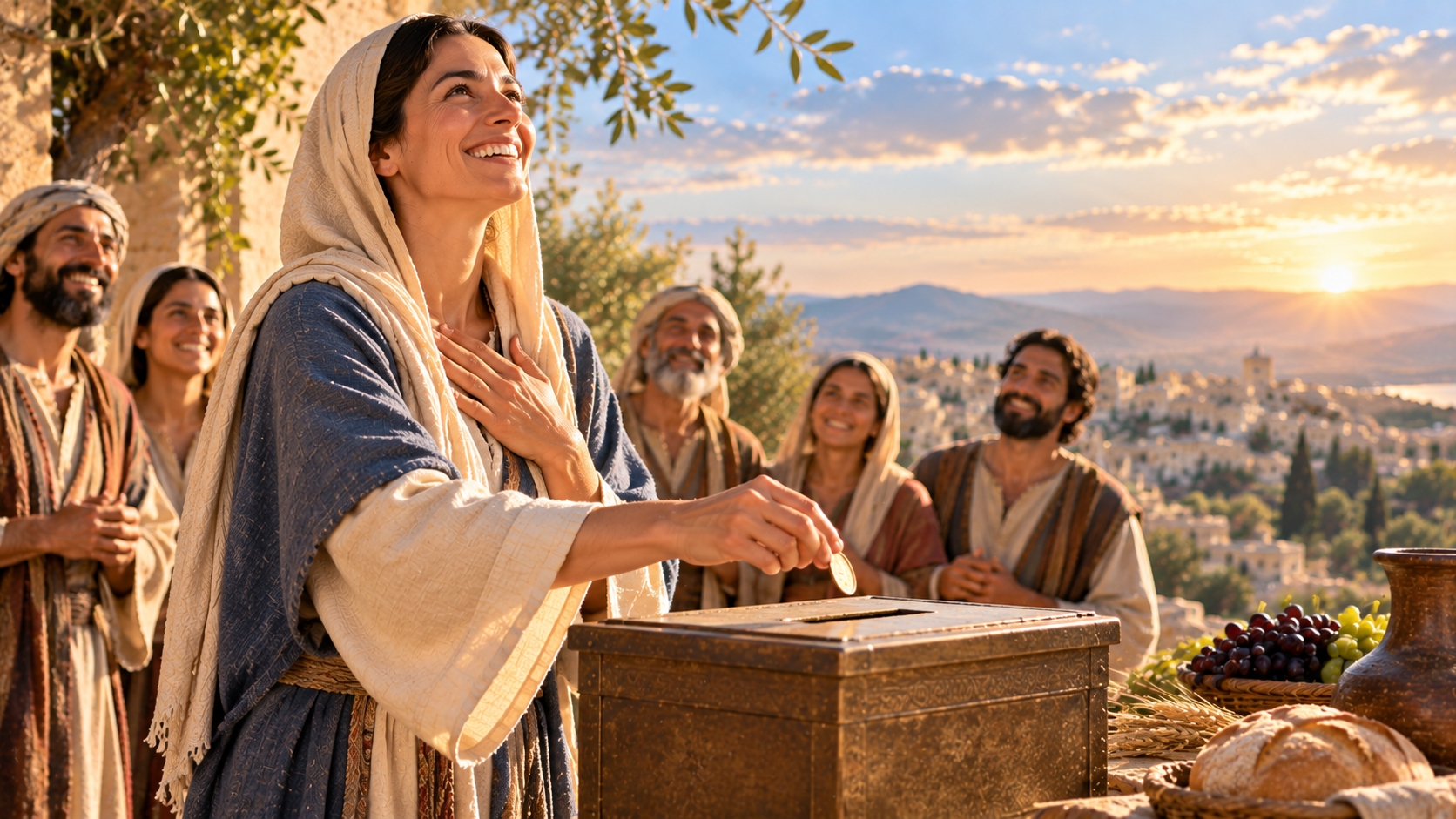
In 2 Corinthians 8 and 9, Paul shows that Christian giving should not happen randomly, thoughtlessly, or merely as the result of a passing emotion. The Corinthians had already expressed their desire to participate in the collection for the impoverished believers in Judea, but now they were to consciously and faithfully carry their commitment through to completion. Paul emphasizes that each person should give what they have decided in their heart to give. Giving therefore requires an inner decision, spiritual reflection, and practical planning. Such planning does not make the gift less spiritual; rather, it shows that we take God’s grace seriously and handle responsibly what He has entrusted to us. Those who give according to a plan unite gratitude, faithfulness, and trust in a concrete service for God’s work.
📜 2. The Biblical Foundation
Paul writes:
“Each of you should give what you have decided in your heart to give, not reluctantly or under compulsion, for God loves a cheerful giver.”
2 Corinthians 9:7
Earlier, he had already encouraged the Corinthians to complete what they had begun:
“Now finish the work, so that your eager willingness to do it may be matched by your completion of it, according to your means.”
2 Corinthians 8:11
And he explains the principle of proportionality:
“For if the willingness is there, the gift is acceptable according to what one has, not according to what one does not have.”
2 Corinthians 8:12
In 1 Corinthians, Paul had already called for an orderly collection:
“On the first day of every week, each one of you should set aside a sum of money in keeping with your income.”
1 Corinthians 16:2
These verses show that Christian giving should be voluntary, intentional, proportional, and orderly.
🌍 3. Connection to Our Time
Even today, giving often happens spontaneously, depending on mood, opportunity, or external pressure. Sometimes people give when they are emotionally moved but forget regular faithfulness. Others sincerely want to be generous, yet they do not plan and eventually discover that very little remains for God’s work. Paul helps us remove generosity from the realm of chance and make it a permanent part of our spiritual life. Planning does not mean that the heart becomes cold; rather, it means that love becomes practical and dependable. Those who consciously plan their giving show that God’s mission does not come only after every other expense has been covered, but has a permanent place in their lives.
💡 4. Central Message of the Lesson
👉 Planned giving is a voluntary, proportional, and intentional response to God’s grace through which our stewardship becomes faithful, dependable, and mission-oriented.
✝️ 5. Theological Focus
The theological focus of this lesson is that giving is a conscious decision of the heart before God. Paul says, “Each of you should give what you have decided in your heart to give.” This makes it clear that a gift is not primarily determined by external pressure but by an inner decision made before God. Christian giving is not mechanical; it is spiritually responsible.
This “decision in the heart” shows that planning is part of faith. God Himself does not act randomly. The plan of salvation was not an afterthought, but an expression of His eternal love and wisdom. If God acts purposefully in His self-giving, then our response to His grace may likewise be intentional, orderly, and faithful. Planning is therefore not the opposite of spirituality but can be an expression of spiritual maturity.
Paul connects planning with willingness. No one should give reluctantly or under compulsion. God is not looking for a forced gift that appears correct outwardly while being given unwillingly within. A gift may be large and yet spiritually poor if it arises only from pressure, fear, or self-promotion. Conversely, a modest gift may be spiritually rich when it comes from love, trust, and gratitude.
At the same time, willingness does not mean arbitrariness. Paul clearly calls the Corinthians to fulfill their commitment. They had begun, and now they were to complete it. Spiritual freedom does not mean supporting God’s work only when something happens to be left over or when one happens to feel like it. Freedom before God leads to responsible faithfulness.
Another important emphasis is proportionality. Paul says that each person should give according to what they have, not according to what they do not have. God does not demand the same amount from everyone because people have different opportunities, responsibilities, and circumstances. Yet God calls everyone to give in proportion to what has been entrusted to them.
Here the principle of offerings differs from that of the tithe. The tithe is defined in the Bible as a specific proportion. Offerings, however, are voluntarily planned and decided in the heart. Yet they, too, should not be arbitrary or thoughtless. They should correspond to what God has given and demonstrate that we recognize His provision.
Planning protects giving from self-deception. Without planning, we may say, “I want to be generous,” while in the end other expenses determine our lives. What is not planned is easily pushed aside. Paul calls us to put our spiritual convictions into practical order. If God’s work is important, it should also be visible in our planning.
Giving is also an act of trust. Those who decide in advance to set something aside for God and for others confess: My life does not ultimately depend on my possessions, but on God’s faithfulness. This attitude stands against the fear of never having enough. It says: God has provided for me, and I want to consciously pass on what I have received.
The theological core is this: Planned giving is stewardship before God. It brings together grace and responsibility, freedom and faithfulness, heart and order. It shows that our possessions are not used randomly but are placed under the lordship of Christ. Where the heart is moved by God’s grace, the planning of life will also be shaped by that grace.
🌟 6. Spiritual Deepening
This lesson leads us to ask whether our generosity is merely an occasional reaction or a permanent expression of our discipleship. Many people would like to give, but they do not plan for it. They wait for the right moment, for stronger emotions, or for a better financial situation. Yet if giving always remains spontaneous, it can easily be displaced by other priorities.
Paul shows a more mature way. Each person should decide in their heart what they want to give. This means that we may talk with God about our resources. We may pray, examine, calculate, and decide. Spiritual giving is not blind but intentional. It is not thoughtless but responsible. It is not chaotic but orderly.
Such planning helps us become honest. It is easy to say that God’s work is important. But our planning reveals the place it actually occupies. Whatever we regularly plan time, money, and energy for has significance in our lives. If mission, help for those in need, and the church appear only at the end, after everything else has already been paid for, then we need to examine our hearts.
At the same time, Paul protects us from false comparison. Not everyone can give the same amount. A wealthy person and a poor person do not have the same possibilities. God sees not only the amount but also the heart and the proportion in relation to what has been received. This truth protects the poor from shame and the wealthy from self-satisfaction. What matters is faithfulness in relation to what God has entrusted to us.
The principle “according to what one has” is deeply pastoral. God does not call anyone to act irresponsibly or to ignore legitimate obligations. But He does call us to honestly ask what is possible. Sometimes we give less not because we cannot, but because we do not want to. Planning helps expose such excuses.
Giving often reveals where our trust lies. If we are afraid of not having enough, giving becomes difficult. If we see possessions as our ultimate security, we hold on tightly. But when we recognize God as our Provider, we learn to let go. Planned giving then becomes an exercise in faith. It trains the heart to be governed less by fear and more by trust.
Joy remains important throughout this process. Paul connects planning not with pressure but with a cheerful heart. A cheerful giver is not carelessly lighthearted but inwardly free. Such a person knows that everything they have comes from God. They also know that God’s work is more important than personal comfort. Therefore, they can give without becoming inwardly bitter.
This joy does not grow automatically. It grows by looking to Christ. Those who look only at numbers may become narrow-hearted. But those who look at God’s grace become thankful. Christ gave Himself. He became poor for our sake. He gives forgiveness, hope, and eternal life. When this vision fills our hearts, giving is no longer primarily experienced as loss but as a response of love.
Planning makes love dependable. A spontaneous gift can be beautiful, but planned faithfulness provides long-term support. Churches, missions, relief organizations, and people in need require more than occasional enthusiasm; they need consistent support. When believers give consciously and regularly, God’s work is supported in a stable way. Thus personal stewardship becomes shared mission.
Planned giving also brings order into personal life. It helps establish priorities and limit consumption. It reminds us that we do not have to use everything we possess for ourselves. It creates room for gratitude, responsibility, and foresight. Those who first ask what belongs to God and what can serve others become freer from the power of always wanting more.
Paul’s words also challenge us to be honest about our excuses. Perhaps we say, “I will give later when I have more.” But if the heart does not learn to give now, greater possessions will not automatically produce greater generosity. Generosity does not begin with wealth but with surrender. Those who are faithful with little will also be able to handle more responsibly.
At the same time, no one should be driven into feelings of guilt by this lesson. Paul does not want a gift given under compulsion. God loves a cheerful giver, not someone who is inwardly crushed or manipulated. Therefore, it is important to speak honestly with God and find a way of giving that is faithful, voluntary, and proportional. Spiritual growth happens step by step.
This lesson reminds us that stewardship is an area of discipleship. We do not follow Christ only with words, songs, and prayers, but also with our decisions concerning possessions. A person’s calendar, bank account, and priorities say much about their heart. God also wants to bring this area under His grace.
When we learn planned giving, our lives become more intentionally directed toward God’s kingdom. We do not merely react; we make conscious decisions. We do not merely wait for feelings; we act from conviction. We do not give from leftovers but from gratitude. In this way, our stewardship becomes a practical testimony that God’s grace changes both our hearts and our priorities.
🔧 7. Practical Application
Practical Steps:
- Pray about the way you handle money, possessions, time, and gifts.
- Consciously decide what place tithes and offerings should have in your life.
- Plan your giving regularly instead of giving only spontaneously or randomly.
- Give proportionally according to what God has entrusted to you.
- Honestly examine which excuses are holding you back from greater faithfulness.
- Avoid giving under compulsion, but also avoid indifference disguised as freedom.
- Intentionally place God’s mission ahead of unnecessary consumption.
- Ask God for a cheerful, faithful, and trusting heart.
❓ 8. Reflection Question
Does my planning reflect that God’s grace, His mission, and the needs of others have a permanent place in my life?
🌟 9. Closing Thought
Paul shows that Christian giving should be intentional, voluntary, and proportional. Each person should give what they have decided in their heart, neither reluctantly nor under compulsion. Planning does not deprive giving of its spiritual character; rather, it makes love faithful and dependable. Those who order their giving before God confess that everything they have received comes from His hand and should be used for His glory. In this way, stewardship becomes a practical response to God’s grace. Planned, cheerful, and responsible giving demonstrates that Christ shapes not only our hearts but also our priorities.
“Each of you should give what you have decided in your heart to give, not reluctantly or under compulsion, for God loves a cheerful giver.”
2 Corinthians 9:7 🧭📊🙏✨
😊 11.4 Attitude
🎁 Giving Cheerfully out of Devotion, Freedom, and Love for God
📖 1. Introduction
Through the example of the Macedonians, Paul shows that our inner attitude toward giving is decisive. They did not give out of abundance, but despite deep poverty and severe affliction. Yet their gift was marked by joy, willingness, and generosity. This shows that true stewardship does not depend primarily on outward possessions, but on the condition of the heart. The Macedonians did not regard giving as a burden, but as a privilege to participate in God’s work and in meeting the needs of their fellow believers. Their attitude was possible because they had first given themselves to the Lord.
📜 2. The Biblical Foundation
Paul writes about the churches in Macedonia:
“For in a severe test of affliction, their abundance of joy and their extreme poverty have overflowed in a wealth of generosity.”
2 Corinthians 8:2
Then he continues:
“For they gave according to their means, as I can testify, and beyond their means, of their own accord.”
2 Corinthians 8:3
He also describes their appeal:
“Begging us earnestly for the favor of taking part in the relief of the saints.”
2 Corinthians 8:4
And finally Paul names the deepest reason for their generosity:
“They gave themselves first to the Lord and then by the will of God to us.”
2 Corinthians 8:5
These verses show that cheerful giving grows out of devotion to God, voluntary love, and the joy of participating in His work.
🌍 3. Connection to Our Time
Even today, giving is often experienced as a duty, a burden, or a financial loss. Many first ask what they can afford, what will remain afterward, or whether others should not be giving more. Paul directs our attention to a different attitude. The Macedonians show that a person can be generous even in limited circumstances when the heart is filled with God’s grace. Cheerful giving does not mean ignoring responsibility or one’s own legitimate needs, but trusting God and loving His mission. A church that gives in this way is not governed by fear, greed, or calculation, but by devotion and joy.
💡 4. Central Message of the Lesson
👉 The right attitude toward giving develops when we first give ourselves to the Lord and, from that devotion, willingly, cheerfully, and lovingly participate in God’s mission.
✝️ 5. Theological Focus
The theological focus of this lesson lies in the devotion of the heart. Paul does not present the Macedonians as an example because they possessed a great deal outwardly. On the contrary, their circumstances were marked by poverty and affliction. Yet they were rich in joy and generosity. In this way, Paul shows that Christian giving is not primarily a question of quantity, but of spiritual orientation.
The key lies in the statement: “They gave themselves first to the Lord.” This is the foundation of all genuine stewardship. God does not first seek our money, but our heart. When the heart belongs to God, possessions, time, strength, abilities, and opportunities are also placed under His lordship. Without devotion, giving can easily remain external, reluctant, or calculating. With devotion, it becomes an expression of love.
Paul describes the Macedonians’ gift as voluntary. This willingness is important because God does not seek forced generosity. A gift given only because of pressure, fear, or social expectations may appear correct outwardly while remaining empty inwardly. God loves a cheerful giver because such a gift makes trust, gratitude, and love visible.
At the same time, their willingness was not indifference. They even begged for the opportunity to participate in the collection. That is remarkable. They did not regard giving as an unpleasant obligation, but as a grace and a fellowship in service. For them, it was a privilege to help suffering fellow believers and to participate in God’s work. This attitude shows how deeply the gospel had transformed their thinking.
The joy of the Macedonians did not arise from comfortable circumstances. Paul speaks of affliction and poverty, but at the same time of overflowing joy. This contradicts ordinary human logic. We normally expect joy when things are going well and we have enough. Yet the Macedonians’ joy came from God’s grace. They knew that despite their outward limitations, they were rich in Christ.
Here it becomes clear that generosity is a fruit of the gospel. Christ gave Himself, and those who are touched by His self-giving become willing to give themselves as well. Christian stewardship is therefore more than financial management. It is discipleship. It reveals whether Christ truly is Lord over the whole life.
The Macedonians gave “according to their means” and even “beyond their means.” This does not mean that the Bible requires irresponsibility. Paul does not demand unwise self-endangerment. But he does show that love sometimes does more than mere calculation would suggest. When a heart is moved by God, a willingness to sacrifice can arise that is astonishing from a human perspective.
This attitude stands in contrast to a faith that always seeks first to protect personal comfort. Whoever gives only when it costs nothing has not yet deeply understood the nature of grace. The love of Christ leads us out of the narrowness of self-centeredness. It enables us to see the needs of others and to participate in God’s mission.
The theological core is this: Cheerful giving is the fruit of a heart that has first given itself to God. Where devotion, grace, and love come together, generosity is not forced but grows from within. Such giving honors God, strengthens the church, and makes the gospel visible.
🌟 6. Spiritual Deepening
This lesson challenges us not only to ask how much we give, but with what attitude we give. It is possible to bring a gift outwardly while inwardly being reluctant. A person can give while calculating, complaining, or expecting recognition. One may even appear generous while actually seeking personal prestige. Paul takes us deeper: God sees the heart.
The Macedonians had little outwardly, but much inwardly. Their poverty could not extinguish their joy. Their affliction could not close their hearts to love. This shows that spiritual wealth does not depend on possessions. A person may have little and yet be rich in trust, gratitude, and devotion. Another may possess much and still remain inwardly poor because fear and selfishness govern the heart.
The decisive point is devotion to the Lord. When I first give myself to God, everything else changes. Then I no longer ask only, “What belongs to me?” but rather, “Lord, what have You entrusted to me?” Possessions no longer become the ruler of my life, but a tool in God’s hand. Giving then becomes not merely a loss, but participation in God’s work.
This devotion must continually be renewed. Our hearts tend to hold on tightly. We desire security, control, and reserves. Responsible planning is, of course, important. Yet behind some forms of caution, fear may also be hidden. Behind some saving, distrust toward God may be concealed. Behind certain excuses, there may be a heart that has not yet learned to trust God completely.
Cheerful giving is therefore a spiritual exercise. It trains our hearts in trust. Every time we give consciously, we are saying: God is my source. I do not live only for myself. His mission is more important than my comfort. The needs of others are not irrelevant to me. What I have has been received, and it should also become a blessing to others.
Joy, however, is not the same as ease. The Macedonians gave in the midst of affliction. Perhaps it was not comfortable for them, but it brought them joy because their hearts were directed toward God. Genuine joy does not always arise where no sacrifice is required. Sometimes it arises precisely where we realize that our lives are part of something greater.
This is also important for the church. A church that gives only out of duty quickly grows weary. A church that gives out of joy becomes alive in mission. It does not see contributions merely as costs, but as participation in God’s commission. It rejoices when people are reached, those in need are supported, and fellow believers are strengthened.
Paul also shows that giving creates fellowship. The Macedonians pleaded for the privilege of sharing in this ministry. This means that whoever gives does not stand outside the work but is right in the midst of it. Even if someone could not personally travel to Judea, through their gift they became part of the ministry to the saints. In this way, generosity connects people across distances.
This truth remains valid today. When we support mission, we participate in what God is doing in other places. Our gifts can make Bibles available, strengthen churches, support ministers, help those in need, sustain media ministry, and bring hope to people. A gift then becomes more than money; it becomes lived fellowship within the body of Christ.
At the same time, the example of the Macedonians protects us from comparisons. Paul does not say that everyone must give the same amount. What matters is not comparison with others, but faithfulness before God. Every person has different possibilities, obligations, and circumstances. Yet everyone can examine whether their heart is free, grateful, and willing.
This lesson also calls us not to limit giving to money. Whoever first gives themselves to the Lord gives Him their whole life. This includes time, attention, prayer, hospitality, abilities, practical help, spiritual gifts, and compassion. Some people may be able to give little financially, but they can serve with great love. Others have greater resources and are called to be faithful in that area as well.
It is important that our giving does not come from compulsion. God does not desire a complaining heart. If we notice that we give reluctantly, we should not think only about the amount, but also about our relationship with God. Perhaps we need a renewed view of Christ. Perhaps we need to recognize anew how much we ourselves have received. Gratitude is the soil in which cheerful generosity grows.
The Macedonians show that poverty is not an automatic excuse for a closed heart, and wealth is no guarantee of generosity. The true question is: Has God’s grace reached my heart? If so, sooner or later this will also become visible in the way I handle possessions. Not perfectly, but genuinely. Not by force, but visibly.
In the end, this lesson leads us back to Jesus. He gave Himself completely. He served willingly. He held back nothing that was necessary for our salvation. Whoever follows Him will learn likewise not merely to give something, but to place themselves at God’s disposal. Then every gift, whether large or small, becomes a sign of love.
🔧 7. Practical Application
Practical Steps:
- Give yourself first to the Lord before thinking about individual gifts.
- Honestly examine whether you give willingly, cheerfully, and out of love.
- Ask God to transform fear, greed, and reluctance into trust and gratitude.
- Do not see giving as a loss, but as participation in God’s work.
- Do not compare yourself with others, but ask about your faithfulness before God.
- When thinking about generosity, also consider time, strength, abilities, and practical help.
- Support mission and those in need not merely occasionally, but consciously and joyfully.
- Remember that everything you have was first received from God.
❓ 8. Reflection Question
Do I give out of inner freedom and devotion to God, or do fear, calculation, and self-protection hold my heart back?
🌟 9. Closing Thought
The Macedonians show that genuine generosity does not grow out of outward wealth, but out of inner devotion. Despite poverty and affliction, they gave joyfully, willingly, and abundantly. Their secret was that they had first given themselves to the Lord. Whoever belongs to God begins to see possessions, time, and strength as entrusted gifts. Cheerful giving is therefore not a forced act, but a response to God’s grace and love. Such an attitude turns stewardship into a living testimony to Christ and His mission.
“They gave themselves first to the Lord and then by the will of God to us.”
2 Corinthians 8:5 😊🎁🙏✨
