


🟦 Introduction
Lesson 11 focuses on stewardship and mission in light of the example of Jesus. Paul reminds the Corinthians that Christ was rich, yet for our sake became poor, so that through His self-giving we might become rich. Therefore, Christian giving is not merely a financial act but a spiritual response to God’s grace. Those who first give themselves to the Lord will also be willing to use their resources, time, and gifts for others and for God’s work. Paul also shows that planned, cheerful, and voluntary giving strengthens the unity of the church and makes mission possible. This lesson invites us to use everything God has entrusted to us with gratitude, faithfulness, and for the glory of Christ.
✉️ FIRST AND SECOND CORINTHIANS
🌍 Lesson 11: Stewardship and Mission
✝️ 11.1 The Example of Jesus
💝 Christ gave Himself so that our generosity might grow out of His grace
📖 1. Introduction
In 2 Corinthians 8 and 9, Paul speaks about a specific collection for the impoverished believers in Judea. Yet he does not treat this gift merely as an organizational or financial matter. For him, the gospel itself stands behind every expression of genuine generosity. Therefore, he does not begin with human duty but points first to Jesus Christ. Christ was rich in heavenly glory, yet for our sake He became poor, so that through His self-giving we might become rich. Whoever contemplates this sacrifice recognizes that Christian stewardship does not begin with money, but with a heart moved by the grace of Christ.
📜 2. The Biblical Foundation
Paul writes:
“For you know the grace of our Lord Jesus Christ, that though he was rich, yet for your sakes he became poor, that ye through his poverty might be rich.”
2 Corinthians 8:9
This verse summarizes the mission of Jesus with remarkable brevity. Christ left the glory of heaven, came into our fallen world, took the form of a servant, and humbled Himself even to death on the cross. His poverty was not merely material deprivation but the voluntary self-humiliation of the Son of God for lost humanity. Paul therefore shows that the deepest foundation of the believers’ generosity is not human morality but the grace of Jesus. Those who have been made rich through Christ are invited to pass on this grace through a generous life.
🌍 3. Connection to Our Time
Even today, giving is often understood in purely practical terms: as a donation, contribution, support, or financial obligation. Paul, however, leads us deeper. He shows that every gift should be viewed in light of Christ’s self-giving. If Jesus gave Himself, then we cannot live as though our resources, our time, and our strength belonged only to us. Many people hold tightly to what they have because they fear not having enough; yet the gospel frees us to trust and to be generous. Whoever keeps the self-giving of Jesus before their eyes learns not to see possessions as the center of life, but as an opportunity to support God’s love and mission.
💡 4. Central Message of the Lesson
👉 Christian generosity grows out of the grace of Jesus, who was rich and for our sake became poor, so that through His self-giving we might become spiritually rich and serve others.
✝️ 5. Theological Focus
The theological focus of this lesson lies in Christ’s voluntary humiliation. Paul says that Jesus was rich. This richness points to His eternal glory with the Father, to His divine dignity, power, and perfection. Christ was not an ordinary human being who struggled to rise toward God, but the Son of God who existed in glory and yet was willing to come down to us.
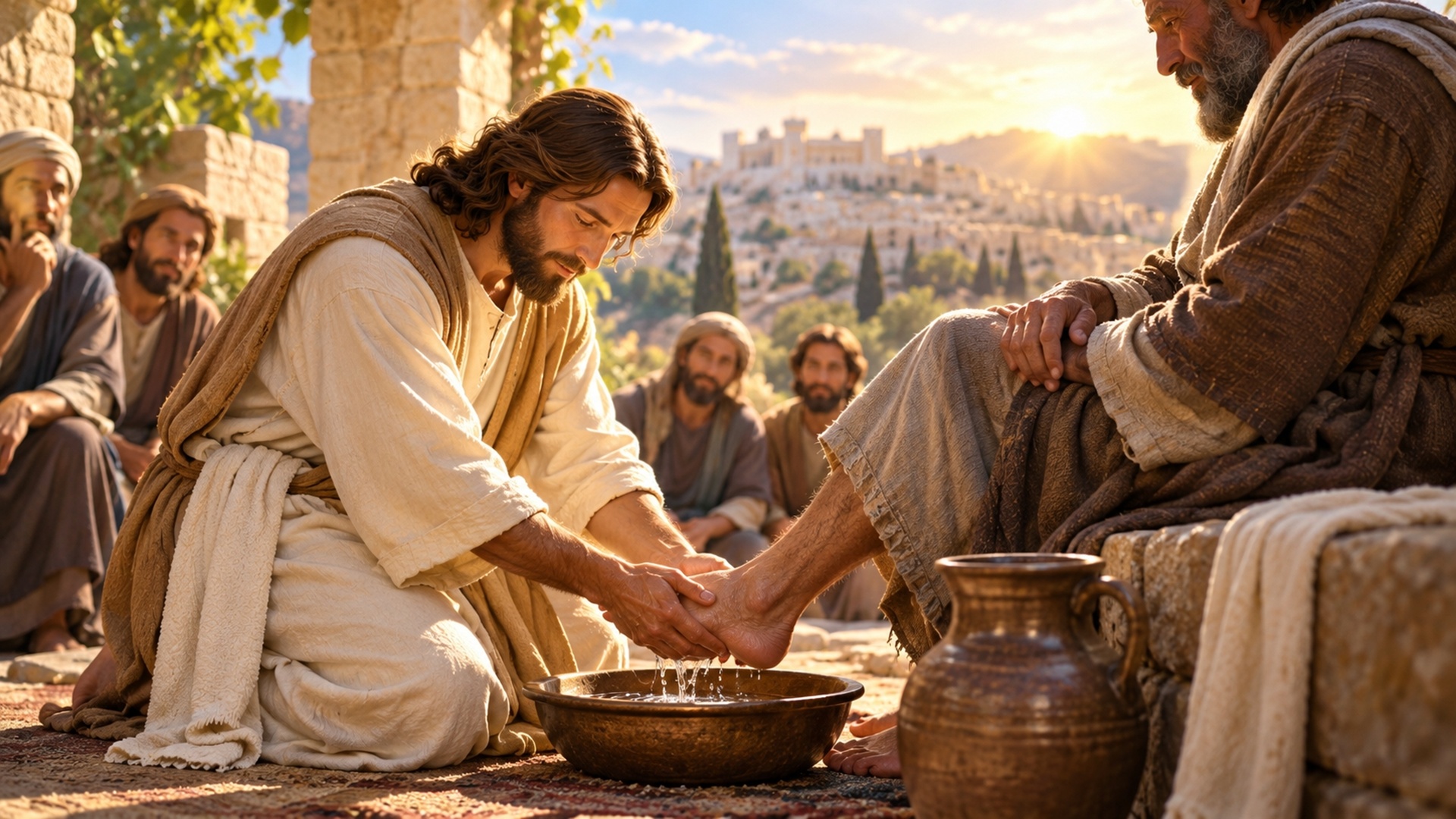
That Christ became poor therefore means far more than outward poverty. He became human, entered our broken world, lived under conditions of weakness, temptation, rejection, and suffering, and finally accepted death on the cross. He possessed everything and yet selfishly held on to nothing. He gave Himself so that human beings could be saved.
Here we see the heart of the gospel. Salvation does not happen because humanity can offer God something great enough. Salvation happens because God has given everything in Christ. Jesus became poor so that we might become rich. This richness does not primarily mean material prosperity, but forgiveness, acceptance, new life, hope, peace with God, and the prospect of eternal glory.
In this way, Paul places stewardship on a clear Christological foundation. Giving is not merely a moral act and not merely a religious duty. It is a response to Christ. The believer gives because Christ first gave. We do not give in order to earn God’s love, but because we have been overwhelmed by God’s love.
This changes our motivation. When giving happens only under pressure, it becomes burdensome, reluctant, or calculating. But when giving arises from looking to Christ, it becomes an expression of gratitude. Then a person no longer asks only, “How little do I have to give?” but rather, “How can my life reflect the grace of Jesus?”
Paul connects the example of Jesus with the concrete need of the believers in Judea. This shows that theology and practice belong together. Whoever has understood the gospel does not remain untouched by the needs of others. The grace of Christ becomes practical by opening hands, moving hearts, and making people willing to assume responsibility.
This is not only about money. Money is an important area because it reveals what our hearts are attached to. But Christian stewardship includes everything God has entrusted to us: time, strength, abilities, possessions, influence, spiritual gifts, and opportunities. Ultimately, everything belongs to God and should be used according to His purposes.
The theological core is this: Christ is the supreme example and the deepest source of all Christian generosity. His voluntary poverty makes us rich, and this grace that we have received should become visible in a life that does not selfishly hold on, but gives out of love and supports God’s mission.
🌟 6. Spiritual Deepening
This lesson challenges us to examine our relationship with possessions and security in the light of the cross. Many people are willing to give only when it costs them nothing, when enough remains for themselves, or when they are certain that they will not experience any loss. Jesus, however, shows us a different kind of love. He did not give merely out of superficial abundance; He gave Himself. His self-giving was costly, personal, and complete.
When Paul says that Christ became poor, he leads us to the deepest expression of divine love. The Son of God did not come in earthly glory, luxury, and distance from those who suffer, but in humility. He was born in simple circumstances, lived without earthly security, and walked the path of the cross. His love was not limited to words. It became visible in sacrifice, service, and self-giving.
This challenges our own generosity. Do we give only when it is convenient? Do we serve only when others notice? Do we support mission only when it does not interfere with our own plans? The example of Jesus calls us to think more deeply. True love does not first ask what benefits us personally, but seeks the salvation of others and the glory of God.
At the same time, this truth must not be understood legalistically. Paul does not force the Corinthians through guilt. He shows them Christ. That is important. Genuine generosity does not arise by shaming or manipulating people, but by helping them recognize the grace of Jesus anew. Whoever looks to Christ is transformed from within.
Jesus became poor so that we might become rich. This statement is full of comfort. Our true wealth does not lie in what we possess, but in what Christ has given us. We are rich because we have forgiveness. We are rich because God has accepted us. We are rich because we have hope beyond death. We are rich because we belong to God’s family. Whoever recognizes this wealth no longer needs to cling desperately to everything they possess.
Generosity is therefore also an act of trust. When I give, I confess that God is my security. In doing so, I say: my life does not ultimately depend on my possessions, but on God’s faithfulness. This does not mean acting foolishly or irresponsibly, but it does mean that fear should not be my master. Christ frees us from the tyranny of clinging to what we have.
The Macedonians, whom Paul mentioned earlier, demonstrate precisely this freedom. Although they were poor, they gave generously because joy and grace filled their hearts. They are a practical example showing that generosity does not primarily depend on the balance in one’s bank account. A poor heart can be stingy even in abundance, while a heart filled with Christ can act generously even under limitations.
This truth is extremely important for the church. Mission requires resources, but even more than that, it requires hearts that belong to Christ. When people first give themselves to the Lord, their gifts, their time, and their strength will also be placed in God’s service. Without surrender, giving becomes mere duty. With surrender, giving becomes worship.
The example of Jesus also protects us from pride in giving. When we give, we do nothing that gives us a reason to elevate ourselves above others. Everything we have has been received. And the greatest gift was not something we gave, but something we received: Christ Himself. Therefore, Christian generosity remains humble. It does not glorify the giver, but the Lord.
At the same time, the example of Jesus makes our responsibility serious. If Christ gave Himself for us, we cannot remain indifferent to the needs of others. The poor believers in Judea were not distant strangers, but brothers and sisters in the body of Christ. Even today, mission connects people across borders, languages, cultures, and distances. Our gifts can be an expression of the fact that we are one worldwide family in Christ.
This lesson therefore invites us to a spiritual reordering of our priorities. What is truly important to me? What do I use my resources for? Does the way I handle money reflect the love of Jesus? Do my possessions serve only my comfort, or do they also serve God’s kingdom? Such questions are not easy, but they help us become honest before God.
In the end, the issue is not that everyone gives the same amount. The issue is that everyone keeps Christ before their eyes. Looking to Jesus makes our hearts tender, free, and grateful. Whoever recognizes how much Christ has given will begin to understand their own life as a gift to God. Stewardship then ceases to be a burden and becomes a response of love.
🔧 7. Application in Daily Life
Practical Steps:
- Regularly reflect on what Christ gave up for you and what He bore on the cross.
- Examine the way you handle money in the light of the grace of Jesus.
- Do not ask only what you possess, but why God has entrusted it to you.
- Give not out of compulsion, but as a grateful response to God’s love.
- Plan your giving intentionally so that generosity does not happen only occasionally.
- Support mission because people need to come to know Christ.
- When thinking about stewardship, consider not only money, but also time, strength, abilities, and influence.
- Ask God for a heart that clings less tightly and trusts more deeply.
❓ 8. Reflection Question
How does looking to Jesus, who was rich and for my sake became poor, change the way I relate to possessions, security, mission, and generosity?
🌟 9. Closing Thought
Paul places Christian giving on the foundation of the grace of Jesus. Christ was rich in heavenly glory, yet for our sake He became poor, so that through His self-giving we might become rich. His sacrifice shows that true love does not selfishly hold on to what it has, but gives itself in order to save others. Stewardship is therefore more than the management of money; it is a spiritual response to the gospel. Whoever truly keeps Christ before their eyes will learn to use possessions, time, strength, and gifts for God’s mission. Generosity comes alive wherever the heart is filled with the selfless love of Jesus.
“For you know the grace of our Lord Jesus Christ, that, though he was rich, yet for your sakes he became poor.”
2 Corinthians 8:9 ✝️💝🙏✨
