
🌍 WHEN THE WORLD IS APPROACHING ITS END
🕯️ Hope, Watchfulness, and Faithfulness in Matthew 24–25
📖 Part 1 – Sermon 3
🎭 When Deception Looks Like Truth – Tested in the Light of Scripture
🕯️ Recognizing deception in the light of Scripture and remaining faithful to Christ
📜 Main Text
“Then if anyone says to you, ‘Look, here is the Christ!’ or ‘There!’ do not believe it. For false christs and false prophets will arise and perform great signs and wonders to deceive, if possible, even the elect. See, I have told you beforehand. Therefore, if they say to you, ‘Look, He is in the wilderness!’ do not go out; or ‘Look, He is in the inner rooms!’ do not believe it. For as the lightning comes from the east and flashes as far as the west, so also will be the coming of the Son of Man.”
Matthew 24:23–27
🔦 Key Verse
“To the law and to the testimony! If they do not speak according to this word, there is no light of dawn for them.”
Isaiah 8:20
🧭 Sermon Thought
The most dangerous deception does not openly appear as a lie. Instead, it combines religious language, impressive experiences, and supernatural signs with a message that contradicts the Word of God. Christ, however, does not leave His church without guidance. Those who know Jesus, are rooted in Holy Scripture, and test every teaching and every experience by God’s revealed Word do not have to be helplessly exposed to the deceptions that are coming.
🌅 Welcome and Introduction
Dear church family, in the first two sermons of this series, we saw that everything earthly can be shaken and that God Himself places a limit on the great tribulation. In today’s passage, Jesus speaks of another danger that is even more difficult to recognize than open persecution. When an enemy attacks visibly, we at least know that we are in danger. But when deception looks religious, is accompanied by signs, and even bears the name of Christ, it can appear to be truth.
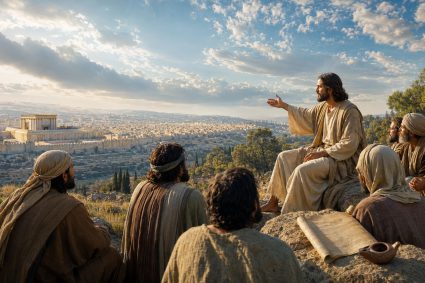
Jesus begins His discourse on the end times with the warning: “Take heed that no one deceives you.” He repeats this warning several times throughout Matthew 24. He also speaks about wars, famines, earthquakes, and persecution, but He emphasizes no other subject as strongly as spiritual deception. In this way, He makes it clear that the greatest danger of the last days is not that God’s people know too little about political developments, but that people mistake religious deception for the work of God.
An obvious lie can often be recognized quickly. Effective deception, however, contains enough truth to appear credible. It uses familiar biblical terms, speaks about Jesus, healing, peace, love, or revival, and may be accompanied by extraordinary experiences. Yet at crucial points, it distorts the character of God, weakens the authority of His commandments, displaces Christ’s work of redemption, or places human experiences above Holy Scripture.
Jesus announces this danger so that His children may be prepared. His words are not intended to create an atmosphere of suspicion in which we see fraud everywhere. They are meant to give us a clear foundation upon which we can distinguish between truth and error. The Lord does not want a gullible church that immediately declares every extraordinary event to be divine. Nor does He want a cold and suspicious church that rejects every work of the Holy Spirit. He calls us to a faith that remains open to God’s activity while carefully testing everything by His Word.
📜 Narrative Illustration: The Sealed Message
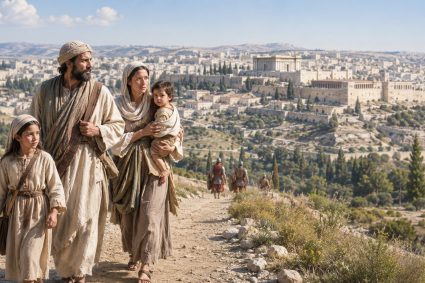
The following story is a narrative illustration set against the background of the early Christian communities after their flight from Jerusalem.
Several years had passed since Matthias had left Jerusalem with his family. They now lived with other Christians in a town beyond the Jordan. Their new life had not been easy. Matthias had established a workshop, Hanna cared for travelers and those in need, and their daughter Miriam had grown into a young woman. Jerusalem had been destroyed, but the words of Jesus had warned the believers in time and shown them the way to safety.
One warm afternoon, a stranger appeared in the marketplace. His garment was covered with dust, but his voice sounded strong and convincing. Within minutes, a large crowd gathered around him. He reported that he had come from the wilderness and had seen a man there whom many believed to be the promised Messiah.
“He heals the sick,” the stranger cried. “People who had been unable to walk for years are standing up. He knows the thoughts of those who stand before him, and fire appears in the sky when he prays. This very evening, he will reveal himself in the wilderness. Whoever believes in the deliverance of Israel should come with us.”
The news spread quickly. Some Christians also became interested. A man named Reuben ran to Matthias and excitedly told him what he had heard.
“Perhaps the Lord has returned,” Reuben said. “We have waited for Him so long. What if we miss this opportunity?”
Matthias set his tool aside and looked thoughtfully at his friend. “Did this man say that Jesus had appeared in the wilderness?”
“Yes. Many people have seen his miracles.”
“Then we must not go.”
Reuben reacted with surprise. “How can you judge so quickly? You have neither seen nor heard him. Perhaps God is working in a way we did not expect.”
“That is possible,” Matthias replied calmly. “God is not bound by our expectations. But He never contradicts the word He has already given.”
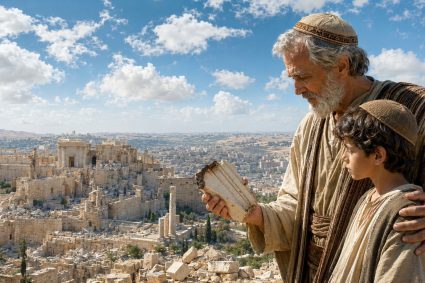
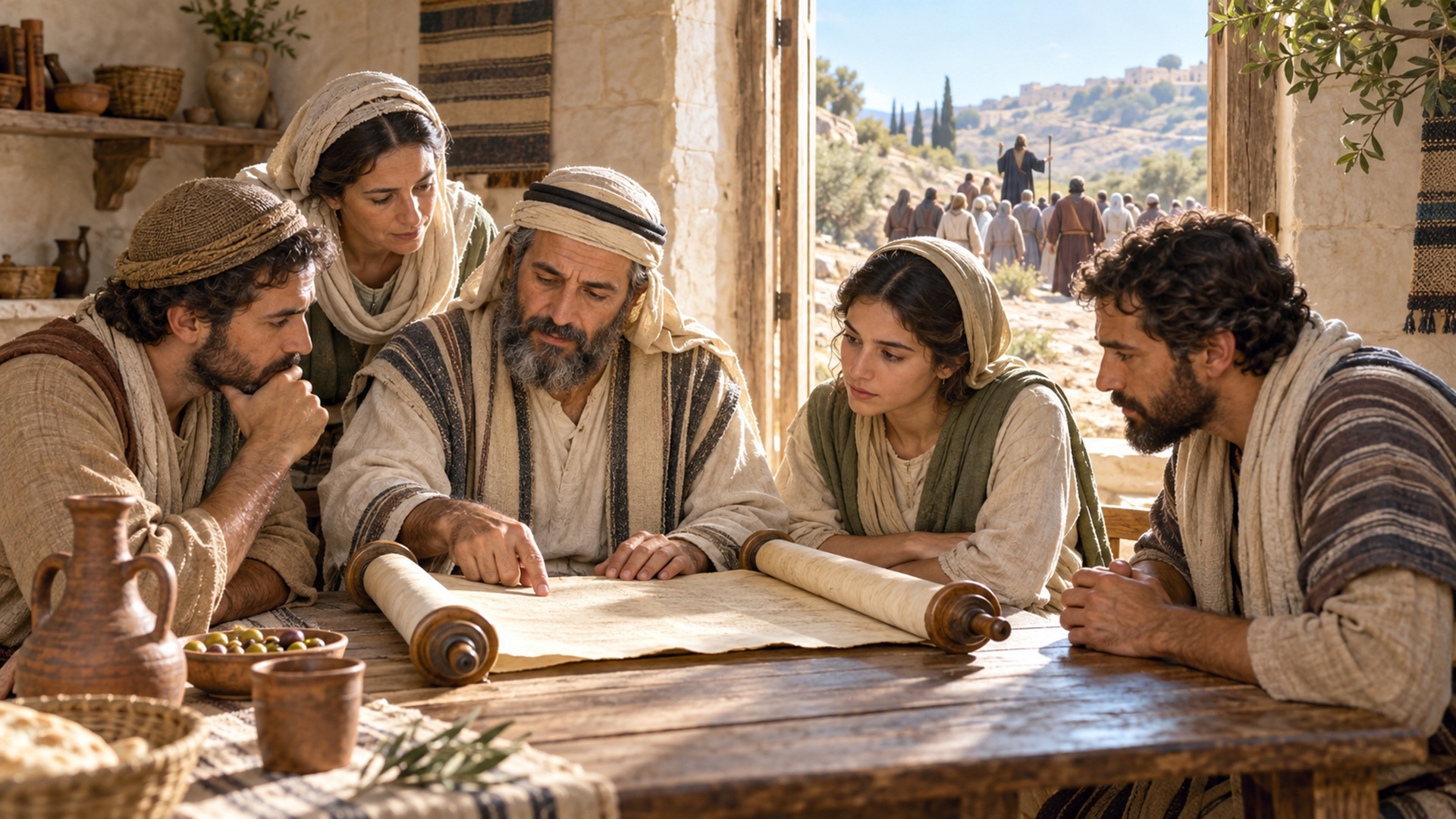
He went into the house and brought back a small scroll. Parts of Jesus’ discourse on the Mount of Olives had been written on it. The believers had carefully preserved these words because many of them had personally experienced their saving significance during the flight from Jerusalem. Matthias carefully unrolled the document and read:
“Therefore, if they say to you, ‘Look, He is in the wilderness!’ do not go out; or ‘Look, He is in the inner rooms!’ do not believe it.”
Matthew 24:26
Reuben remained silent. After a while, however, he objected: “But what about the miracles? Would God allow a false prophet to do such things?”
Matthias read the sentence that came immediately before it:
“For false christs and false prophets will arise and perform great signs and wonders to deceive, if possible, even the elect.”
Matthew 24:24
“Jesus did not tell us that every miracle is proof of the truth,” Matthias explained. “On the contrary, He warned us that deception itself could be accompanied by great signs.”
By then, Miriam had joined them. She remembered the night her family had left Jerusalem. At that time, her father had explained that they needed to trust the word of Jesus more than what their eyes could see.
“It is the same decision as it was then,” she said. “When the Romans withdrew, everything looked safe, but Jesus’ word told us to flee. Now something looks divine, but Jesus’ word tells us not to go.”
Matthias nodded. “Our eyes can only see what is happening before them. Jesus, however, also knows what lies behind an appearance.”
That evening, many people left the town and went into the wilderness. Some Christians joined them. Matthias, his family, and a small group of believers remained behind. They gathered in a house, read the words of Jesus, and prayed that God would bring back those who had followed the message.
Late that night, Reuben returned. He was tired, ashamed, and visibly shaken. The supposed Messiah had spoken about an armed revolt, demanded money, and required absolute obedience. When some listeners asked questions, his followers threatened them. Reuben had managed to escape.
“His signs looked convincing,” he said quietly. “When I stood there, I wanted to believe that everything was genuine. Only when he demanded that we obey him blindly did I remember your words.”
Matthias did not respond with accusations. He took the scroll and placed it on the table.
“This word led us out of Jerusalem,” he said. “Today it brought you back from deception. It will also preserve us in the future if we allow ourselves to be guided, not by what looks impressive, but by what Christ has said.”
Miriam looked at the small scroll. The material was unremarkable, and the writing had already faded in places. The stranger in the marketplace had spoken loudly and told of spectacular miracles. God’s truth, by contrast, had been read that evening in a simple house without any visible sign. Nevertheless, it had become clear which message truly possessed light.
1. ⚠️ Jesus’ First Warning Is: Do Not Be Deceived
When the disciples asked Jesus about the sign of His return and the end of the world, He did not begin His answer with a chronological list of political events. His first statement was a personal warning:
“Take heed that no one deceives you. For many will come in My name, saying, ‘I am the Christ,’ and will deceive many.”
Matthew 24:4–5
Jesus does not merely say that a few individuals will appear whose fraud will be easy to recognize. He speaks of “many” who will come in His name and will likewise deceive many. The deception appears Christian, uses the name of Jesus, and claims spiritual authority. For this very reason, the church must learn to distinguish between a Christian name and the true Christ of the Bible.
Paul warned the church in Corinth about the same danger:
“For if he who comes preaches another Jesus whom we have not preached, or if you receive a different spirit which you have not received, or a different gospel which you have not accepted, you put up with it readily enough.”
2 Corinthians 11:4
It is possible to speak frequently about Jesus while still presenting another Jesus. An “other Jesus” may be a savior who offers comfort but does not call people to repentance; a Jesus who affirms human desires but does not take God’s commandments seriously; or a Jesus who is admired as a spiritual teacher while His substitutionary death and bodily resurrection no longer hold central importance. By contrast, the Jesus of the Bible is at once Creator, Lawgiver, sacrificial Lamb, risen Lord, heavenly High Priest, Judge, and returning King.
A “different gospel” may also use familiar religious language. It may promise peace without reconciliation, forgiveness without repentance, spiritual power without obedience, or salvation without the cross. Paul, however, declares:
“But even if we, or an angel from heaven, should preach to you a gospel contrary to what we have preached to you, let him be accursed!”
Galatians 1:8
Even an angelic appearance must not be accepted without examination. The identity of a messenger is not proved by outward splendor, and the truth of a message does not depend on the intensity of the experience accompanying it. What matters is whether it agrees with the gospel that God has already revealed in Holy Scripture.
2. 🎭 Why Religious Deception Can Seem So Convincing
A crude lie usually reveals its contradiction with the truth openly. Spiritual deception works more subtly. It mixes truth with error, uses correct terms with altered meanings, and appeals to emotions before the mind has an opportunity to examine the message. It may present itself as an extraordinary answer to a person’s deepest desires.
Someone grieving the death of a loved one may be approached by an apparition claiming to be that beloved person. Someone who is seriously ill may be influenced by the promise of supernatural healing. Someone burdened by guilt may accept a message that promises comfort without naming sin. Someone searching for religious certainty may follow a person who confidently claims to receive direct revelations from God.
The Bible does not deny that supernatural signs may occur. Instead, it warns us not to attribute every sign automatically to God. Moses already explained to Israel:
“If a prophet or a dreamer of dreams arises among you and gives you a sign or a wonder, and the sign or wonder of which he spoke comes to pass, and he says, ‘Let us go after other gods’—which you have not known—‘and let us serve them,’ you shall not listen to the words of that prophet or that dreamer of dreams.”
Deuteronomy 13:2–4
The predicted sign could actually come to pass, but its fulfillment did not prove that the messenger had been sent by God. The message had to be tested by whether it led the people to faithfulness toward the true God. A miracle that leads to disobedience does not carry heaven’s approval.
Pharaoh’s magicians imitated some of the signs that Moses and Aaron performed in Egypt at God’s command. Their limited imitations were intended to create the impression that there was no essential difference between God’s power and Egyptian magic. Eventually, however, the limits of their power became evident. The genuine and the imitation could look similar for a time, but they did not have the same origin or lead to the same goal.
In the last days, the visible effect of an appearance will also impress many people more strongly than the written Word of God:
“And it performs great signs, so that it even makes fire come down from heaven to the earth in the sight of men. And it deceives those who dwell on the earth by those signs which it was granted to do in the presence of the beast.”
Revelation 13:13–14
John does not say that people will be deceived despite the signs, but “by those signs.” What they regard as the final proof will become the instrument of their deception. Therefore, our faith must learn today to rest on a firmer foundation than visible miracles and intense emotions.
3. 🔍 The Elect Are Not Carelessly Invulnerable
Jesus describes the false christs and false prophets as so convincing that they will seek to “deceive, if possible, even the elect.” This statement should lead us neither to false security nor to despair. It shows how serious the deception will be while also revealing that Christ has provided a way of preservation.
The elect possess no natural infallibility. They cannot stand because they are more intelligent, suspicious, or religious than other people. Peter was a chosen disciple and still believed that he could never fall. Only a few hours later, he denied Jesus three times. His experience shows how dangerous spiritual self-confidence can be.
Paul warns:
“Therefore let him who thinks he stands take heed lest he fall.”
1 Corinthians 10:12
Anyone convinced that he could never be deceived has already lost an important wall of protection. He may examine things less carefully because he trusts his own judgment. Humility, by contrast, recognizes that anyone can be deceived if he moves away from Christ and His Word.
Jesus prayed for His disciples:
“Sanctify them by Your truth. Your word is truth.”
John 17:17
The elect are not preserved by their own wisdom, but by Christ, who sanctifies them in the truth. They remain willing to learn, examine themselves, accept biblical correction, and hold fast to the Savior. Their security does not consist in knowing every detail of the deception in advance, but in knowing the voice of the true Shepherd.
“The sheep follow him, for they know his voice. Yet they will by no means follow a stranger, but will flee from him, for they do not know the voice of strangers.”
John 10:4–5
A sheep does not need to study the voice of every possible deceiver. What matters is that it becomes familiar with the Shepherd’s voice. Likewise, our best preparation does not consist in researching every false teaching in all its details, but in knowing the character, words, and saving work of Jesus so well that we recognize the contradiction when another Christ is presented.
4. 📖 Holy Scripture Is the Authoritative Standard
Isaiah lived at a time when people no longer wanted to listen to God’s Word. They turned to mediums and fortune-tellers for guidance. The prophet responded:
“Should not a people seek their God? Should they seek the dead on behalf of the living? To the law and to the testimony! If they do not speak according to this word, there is no light of dawn for them.”
Isaiah 8:19–20
The expression “the law and the testimony” refers to the Word God had already given. Every new message, every religious teaching, and every supernatural experience must be tested by it. If it contradicts the revealed Word, it possesses no divine light, regardless of how impressive it appears or how many people follow it.
The believers in Berea provide us with an important example. When Paul preached the gospel to them, they received his words eagerly, but they did not abandon careful examination:
“These were more noble-minded than those in Thessalonica, in that they received the word with all readiness and searched the Scriptures daily to find out whether these things were so.”
Acts 17:11
They did not reject Paul out of suspicion, but listened with openness. At the same time, they did not accept his message solely because of his personality or persuasive speech. They compared what they heard with Scripture every day. Openness and examination were not opposed to each other.
John gives the church the same instruction:
“Beloved, do not believe every spirit, but test the spirits, whether they are of God, because many false prophets have gone out into the world.”
1 John 4:1
The command to test the spirits is addressed to the entire church. Preachers, theologians, and church leaders are not the only ones who should be able to discern. Every believer needs a personal knowledge of the Bible. If our convictions depend exclusively on what a popular speaker, a religious personality, or a digital channel claims, our faith remains dependent on someone else’s authority.
Looking ahead to the final deception, Ellen White emphasizes that only those whose minds are filled with the truths of the Bible will stand. Her solemn warning states:
“None but those who have fortified the mind with the truths of the Bible will stand through the last great conflict.”
Preparation therefore does not take place through a superficial reading of a few favorite verses, but through a thorough and coherent knowledge of biblical truth. Ellen G. White, The Great Controversy, chapter 37: “The Scriptures a Safeguard”
5. 🧭 How a Spiritual Message Can Be Tested
A teaching must first be tested by the picture it presents of Jesus. Does it confess the biblical Christ as the eternal Son of God who became human, lived a sinless life, died in our place for our sins, rose bodily from the dead, ministers for us as High Priest, and will return visibly? John identifies the confession of Jesus Christ as a decisive test:
“By this you know the Spirit of God: Every spirit that confesses that Jesus Christ has come in the flesh is of God.”
1 John 4:2
We must then ask how the message treats God’s law. The Holy Spirit never contradicts the commandments He Himself inspired. A teaching may speak extensively about love, but if it declares obedience to be meaningless, it separates love from its biblical form.
“For this is the love of God, that we keep His commandments. And His commandments are not burdensome.”
1 John 5:3
The teaching concerning the state of the dead is also of decisive importance for the last days. The Bible describes death as a sleep without conscious knowledge of events taking place on earth:
“For the living know that they will die; but the dead know nothing.”
Ecclesiastes 9:5
“His spirit departs, he returns to his earth; in that very day his plans perish.”
Psalm 146:4
When an apparition claims to be a deceased person, emotions and familiar memories must not replace our biblical standard. God explicitly forbade contact with the dead because behind such appearances may stand, not the deceased, but deceiving spirits. Christian hope does not rest upon an immortal soul existing independently of the resurrection, but upon the resurrection at the return of Jesus.
“For the Lord Himself will descend from heaven with a shout, with the voice of an archangel, and with the trumpet of God. And the dead in Christ will rise first.”
1 Thessalonians 4:16
Finally, a message must be tested by its spiritual fruit. Does it lead to humility, repentance, love, purity, and obedience, or does it produce pride, personality cults, fanaticism, and dependence on a human leader? Jesus said:
“You will know them by their fruits.”
Matthew 7:16
These tests belong together. A message is not true merely because it appears to produce some good fruit, for a false system may also perform charitable works and generate convincing experiences. Likewise, a confession of faith that sounds correct is insufficient if its practical result draws people away from God’s commandments. The entire message must be considered in the light of the whole of Scripture.
6. ✨ Why Signs and Wonders Are Not Enough
Many people assume that a genuine healing or an inexplicable miracle can come only from God. Jesus Himself contradicts this assumption when He speaks of false prophets who will perform “great signs and wonders.” Revelation 16 also describes demonic spirits that perform signs and gather the rulers of the earth for the final battle.
“For they are spirits of demons, performing signs, which go out to the kings of the whole world to gather them to the battle of that great day of God Almighty.”
Revelation 16:14
This does not mean that every extraordinary event must be demonic. God continues to work, answer prayers, guide people, and heal. The Bible, however, calls us to test the message accompanying the event. A miracle does not stand above the Word; it is judged by the Word.
Jesus warned that on the day of judgment, people would point to their supernatural works:
“Many will say to Me in that day, ‘Lord, Lord, have we not prophesied in Your name, cast out demons in Your name, and performed many wonders in Your name?’ And then I will declare to them, ‘I never knew you; depart from Me, you who practice lawlessness!’”
Matthew 7:22–23
These people use the name of Jesus and speak about prophetic messages, deliverances, and miracles. In His answer, Christ does not explicitly deny that extraordinary things took place. He does, however, declare that no living relationship with Him existed. Spiritual activity is no substitute for obedient faith.
The following verse shows how this relationship becomes visible:
“Therefore whoever hears these sayings of Mine and does them, I will liken him to a wise man who built his house on the rock.”
Matthew 7:24
Here again, Jesus connects preservation with hearing and obeying His Word. A spectacular experience may impress us, but only God’s truth can renew our character and establish our lives upon the rock.
7. 👑 The Return of Jesus Cannot Be Hidden
Jesus gives His church an especially clear identifying mark of His return:
“Therefore, if they say to you, ‘Look, He is in the wilderness!’ do not go out; or ‘Look, He is in the inner rooms!’ do not believe it. For as the lightning comes from the east and flashes as far as the west, so also will be the coming of the Son of Man.”
Matthew 24:26–27
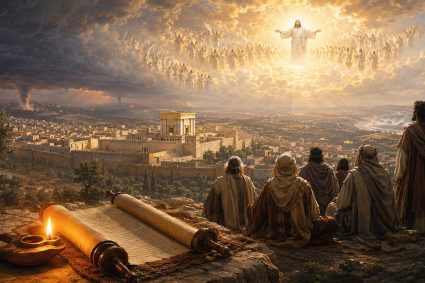
The true return of Jesus will neither take place in a secret room nor be confined to a remote location. No one will need to travel in order to see the returned Christ. No one will need to receive the news secondhand. His coming will be personal, visible, audible, powerful, and perceptible throughout the world.
John writes:
“Behold, He is coming with clouds, and every eye will see Him.”
Revelation 1:7
Paul adds:
“For the Lord Himself will descend from heaven with a shout, with the voice of an archangel, and with the trumpet of God.”
1 Thessalonians 4:16
Jesus will not appear alone somewhere on earth and then travel from place to place. He will come in the glory of His Father and accompanied by all the holy angels:
“When the Son of Man comes in His glory, and all the angels with Him, then He will sit on the throne of His glory.”
Matthew 25:31
At His return, the dead in Christ will rise, the living believers will be transformed, and both groups will be caught up to meet the Lord in the air. The redeemed will not greet Jesus on earth so that He may secretly establish an earthly kingdom here. They will be taken up to Him:
“Then we who are alive and remain shall be caught up together with them in the clouds to meet the Lord in the air. And thus we shall always be with the Lord.”
1 Thessalonians 4:17
These biblical characteristics protect us from a false Christ who appears in a particular location, performs miracles, and claims to have returned to earth. Even if such a figure appears kind, quotes biblical words, and seems to heal illnesses, we must not follow him. Jesus has told us beforehand: “Do not believe it!”
8. 🐍 The Final Imitation of Christ
Since the beginning of the great controversy, Satan has sought to misrepresent the character of God. In the Garden of Eden, he questioned God’s Word and claimed that disobedience would not lead to death:
“Then the serpent said to the woman, ‘You will not surely die.’”
Genesis 3:4
This first lie continues today in the belief that human beings naturally possess an immortal, conscious entity that continues to live in death. In this way, the ground is prepared for spiritualistic manifestations. When people believe that the dead can communicate with them, they will more readily accept messages that appear to come from loved ones, saints, or biblical figures.
Paul explains that Satan does not always present his deception in a terrifying form:
“And no wonder! For Satan himself transforms himself into an angel of light.”
2 Corinthians 11:14
The expression “angel of light” shows how convincing the imitation can be. Satan will not necessarily offer evil as something openly evil. He may promise peace, unity, and spiritual renewal while gradually leading people away from God’s truth.
In the final great deception, Satan will attempt to imitate Christ Himself. Ellen White describes an impressive appearance that will create the impression in many places that the Savior has already come. This figure speaks graciously, heals diseases, and repeats some of Jesus’ truths, yet contradicts God’s law on a decisive point. The deception will therefore be exposed not by outward appearances but only by the Bible. Ellen G. White, The Great Controversy, chapter 39: “The Time of Trouble”
This warning is especially important for the Adventist proclamation of the last days. If a supernatural figure claims to be Christ while declaring that the first day of the week is the day of rest sanctified by God, his message stands in contradiction to the fourth commandment. God will not revoke His own order, and the true Jesus will not alter at His return a commandment that He established as Creator and proclaimed at Sinai.
The Sabbath is neither an identifying sign arbitrarily chosen by human beings nor a meritorious achievement. It points to the Creator and expresses our decision to place God’s authority above human tradition. At its heart, the final deception therefore concerns the question of whose word possesses binding authority over our conscience.
9. 🕊️ The Holy Spirit Never Leads Away from Scripture
Some people set the Holy Spirit and the Bible against each other. They believe that an immediate spiritual experience is more living and more authoritative than the written Word. The Holy Spirit, however, inspired Scripture and will never give a message that contradicts His earlier revelation.
“For prophecy never came by the will of man, but holy men of God spoke as they were moved by the Holy Spirit.”
2 Peter 1:21
Jesus said about the Spirit of truth:
“He will glorify Me, for He will take of what is Mine and declare it to you.”
John 16:14
The genuine work of the Holy Spirit places Christ at the center, convicts of sin, leads into truth, and transforms the character. It produces neither dependence upon a charismatic individual, contempt for biblical teaching, nor spiritual pride. Where people claim that the Spirit has permitted them to disregard clear statements of Scripture, we can be certain that the Spirit of God has not spoken.
At the same time, fear of deception must not lead us to reject every living experience of faith. Paul brings both sides together:
“Do not quench the Spirit. Do not despise prophecies. Test all things; hold fast what is good.”
1 Thessalonians 5:19–21
We must not quench the Spirit or despise spiritual gifts. Nevertheless, we must test everything. We may gratefully hold fast to what agrees with biblical truth and produces good fruit. We must reject what contradicts God’s Word, even if it seems emotionally moving or supernaturally impressive.
10. 🏠 The Church Needs a Culture of Examination
A healthy church does not treat questions with suspicion. When every critical question is regarded as a lack of faith, an atmosphere arises in which spiritual abuse can grow. Biblical leadership does not demand blind obedience to human beings. Church leaders, preachers, and teachers also remain subject to the Word of God.
Peter exhorts the elders:
“Shepherd the flock of God which is among you, serving as overseers, not by compulsion but willingly, according to God; not for dishonest gain but eagerly; nor as being lords over those entrusted to you, but being examples to the flock.”
1 Peter 5:2–3
A spiritual leader who refuses to submit to biblical examination does not act in the spirit of Christ. Genuine authority serves, explains, listens, and points beyond itself to Jesus. False spiritual authority demands personal loyalty, suppresses questions, and places its own claims above the consciences of others.
Extraordinary messages must also be examined within the community. Paul writes:
“Let two or three prophets speak, and let the others judge.”
1 Corinthians 14:29
This order protects both the church and the individual messenger. No one has the right, solely on the basis of a strong conviction, to present personal impressions as a binding revelation from God. The church examines in the light of Scripture whether a message is true, balanced, and spiritually sound.
The same principle applies today to content distributed through books, videos, social media, and digital platforms. A professionally designed presentation is not proof of truth. A large number of viewers does not mean that God has confirmed the message. Even a person who quotes many Bible verses can remove them from their context and combine them into a teaching that contradicts the overall testimony of Scripture.
We should therefore learn to ask not only whether a statement sounds biblical, but whether it truly arises from the Bible. To do this, we must read the context, consider parallel passages, and understand difficult texts in the light of clear statements. The Bible explains itself, and no single isolated expression may be used to overturn the overall testimony of Scripture.
11. 🛡️ How We Can Develop Spiritual Discernment Today
Spiritual discernment grows through regular and humble engagement with Holy Scripture. Those who read only occasional isolated verses remain more easily dependent upon impressive claims. Those who study entire books of the Bible, understand their context, and trace God’s work throughout the history of salvation develop an ordered understanding of truth.
This is not merely about increasing knowledge. Jesus said to the religious leaders of His time:
“You search the Scriptures, for in them you think you have eternal life; and these are they which testify of Me. But you are not willing to come to Me that you may have life.”
John 5:39–40
They possessed biblical knowledge, but they rejected the One to whom Scripture pointed. Genuine Bible study leads to Christ, deepens our dependence upon His grace, and transforms our lives. If our knowledge makes us proud, harsh, or argumentative, we may have accumulated information, but we have missed the purpose of the Word.
Prayer is inseparably connected with discernment. James promises:
“If any of you lacks wisdom, let him ask of God, who gives to all generously and without reproach, and it will be given to him.”
James 1:5
We may ask God specifically to purify our motives and protect us from wishful thinking. Sometimes people accept a false message because it promises exactly what they desperately want to hear. Anyone who submits to the will of God will be prepared to reject even a pleasant message if it does not agree with Scripture.
Obedience also sharpens spiritual perception. Jesus said:
“If anyone wills to do His will, he shall know concerning the doctrine, whether it is from God or whether I speak on My own authority.”
John 7:17
Those who have already decided to do God’s will recognize the truth more clearly. Those who want to hold on to a particular sin or avoid an uncomfortable requirement will be more vulnerable to teachings that confirm the path they have chosen.
Finally, we need the fellowship of mature believers. A person who isolates himself spiritually may more easily confuse personal impressions with God’s guidance. In a church shaped by love, observations can be compared, questions can be asked, and one-sided conclusions can be corrected. This fellowship does not replace personal responsibility, but it helps us recognize our blind spots.
12. ❤️ Truth and Love Must Not Be Separated
In the struggle against deception, there is a danger that people may become harsh and argumentative. They may defend correct teachings while treating others without patience or mercy. Paul therefore connects spiritual maturity with the call to speak “the truth in love”:
“But, speaking the truth in love, may grow up in all things into Him who is the head—Christ.”
Ephesians 4:15
Love without truth becomes sentimental and may confirm people in dangerous error. Truth without love becomes cold and may deny the character of Christ that it intends to defend. Jesus united both perfectly. He called sin by its name while treating sinners with a mercy that opened the way to repentance.
When someone follows a false teaching, we should not mock that person. Many are deceived not because they consciously reject God, but because they are seeking comfort, healing, certainty, or spiritual closeness. Behind their credulity may lie a deep human need. We do not help them by despising their experience, but by patiently showing them why God’s Word offers a more dependable foundation.
Paul writes:
“And a servant of the Lord must not quarrel but be gentle to all, able to teach, patient, correcting those who oppose him with gentleness, in the hope that God perhaps will grant them repentance, so that they may know the truth.”
2 Timothy 2:24–25
Our goal is not to win an argument, but to win a person back to truth and to Christ. The same Jesus who clearly said, “Do not believe it,” wept over those who allowed themselves to be deceived. His truth is clear, but His heart remains full of compassion.
🌄 Conclusion: The Unassuming Word That Preserves
Let us return once more to the little house where Matthias placed the scroll on the table. In the marketplace, a man had spoken about spectacular signs, healings, and a secret revelation in the wilderness. His message awakened curiosity, hope, and religious excitement. By contrast, the scroll in the house appeared outwardly unremarkable. It did not shine, perform a visible miracle, or attract a great crowd. Yet it contained the words of Jesus that preserved His church from deception.
Miriam had understood that the decision they faced in the present resembled the decision made during the flight from Jerusalem. At that time, their eyes saw an apparently secure city while the word of Jesus called them to flee. Now people saw impressive signs while the word of Jesus said, “Do not go out” and “Do not believe it.” In both situations, faith meant trusting Christ more than visible appearances.
We, too, may be confronted with messages that affect our emotions more strongly than the quiet voice of Scripture. They may be accompanied by healings, apparitions, extraordinary predictions, or an overwhelming religious atmosphere. Our security will not depend upon our ability to explain every phenomenon. Nor must we prove how every sign has been produced. It is enough to recognize that the message contradicts the clear Word of God.
Jesus announced the deception before it reached its climax. In doing so, He also showed us that we are not helplessly exposed to it. The true Christ has made His voice audible in Scripture. He has clearly described the nature of His return, taught us about the state of the dead, revealed the continuing validity of His commandments, and shown us how to recognize the work of His Spirit.
The small scroll in the story reminds us that God’s truth may appear outwardly unspectacular while remaining stronger than every religious performance. Heaven and earth will pass away, but the words of Jesus will never pass away. Whoever stands upon this Word possesses a firm foundation when deception looks like truth.
📣 Appeal
Dear church family, let us first ask ourselves today what our spiritual convictions are founded upon. Do we believe something because it moves us, because many people are convinced of it, because a well-known personality teaches it, or because we have carefully tested it in the light of the whole of Holy Scripture? Feelings, experiences, and human teachers may have their rightful place, but they must never take over the authority that belongs to the Word of God.
Let us also ask whether we personally know the true Jesus of the Bible. Spiritual discernment grows not only through knowledge of false teachings, but above all through a living relationship with Christ. Those who daily hear His words, receive His grace, love His commandments, and follow His guidance will become familiar with the voice of the Good Shepherd.
Perhaps until now you have accepted a teaching or experience without examining it thoroughly. Christ does not shame you for this. He invites you to bring everything into His light. Truth does not need to fear honest examination. What comes from God will be confirmed by His Word; what contradicts that Word may be released, even if it has been familiar to us for a long time.
If you wish to say today, “Lord Jesus, preserve me from deception and establish my thinking firmly in Your Word,” then bring this request to Him. Ask Him at the same time for a humble heart that accepts correction, an obedient will, and the kind of love that shares truth without harshness. The One who warned His disciples is also the One who can preserve them.
🙏 Closing Prayer
Lord Jesus Christ, we thank You that You have not left us in uncertainty about the deceptions that are coming. You warned Your disciples in time and showed us that not every religious appearance, every miracle, or every message bearing Your name comes from You. At the same time, You have given us a reliable standard: Your revealed Word.
Forgive us when we have trusted human voices more than Holy Scripture. Forgive us when feelings, religious excitement, extraordinary experiences, or the approval of others have shaped our decisions more strongly than Your truth. Free us from spiritual pride and from the belief that we could never be deceived.
Give us a deep hunger for Your Word. Help us not to read the Bible merely superficially or occasionally, but to understand its message thoroughly. Show us Christ in every part of Scripture and allow our knowledge to lead us into a living relationship with You. Preserve us from knowing many truths while still refusing to come to You.
Give us Your Holy Spirit so that we may distinguish between truth and error. Teach us to examine spiritual messages carefully without becoming suspicious and cold. Make us receptive to Your genuine work while keeping us firm against everything that contradicts Your Word. Do not let us quench the Spirit, but help us to test everything and hold fast to what is good.
Especially preserve those whom grief, illness, loneliness, or fear have made vulnerable to false promises. Surround them with Your love and lead them to the hope that is founded in You alone. Protect them from voices that exploit their longing, and give them people who will patiently and mercifully explain Your truth to them.
Prepare Your church for the final great deception. Help us clearly understand the characteristics of Your return and firmly believe that You will come again visibly, audibly, and in great glory. Preserve us from following a Christ who appears on earth, reveals himself in secret rooms, or changes Your holy law.
Teach us to love Your Sabbath as a sign of Your creative power, Your redemption, and Your sovereign authority. Let our obedience arise neither from fear nor human pride, but from a deep love for You. Write Your commandments in our hearts through Your Spirit and make our character like Yours.
Give preachers, teachers, and church leaders humility and faithfulness. Preserve them from placing human authority above the consciences of others. Make our churches places where questions are taken seriously, teachings are tested biblically, and people are lovingly guided into the truth.
Lord Jesus, we want to know Your voice so well that we will not follow the voice of a stranger. Keep us close to You when deception appears convincing and the majority chooses another path. Give us the courage to trust Your Word even when our eyes are impressed and our emotions are stirred.
We thank You that You are stronger than the enemy and that no one can snatch Your children out of Your hand. Complete the work You have begun in us and preserve us until the day when You return on the clouds of heaven and every eye will see You.
We pray in Your holy name.
Amen.
