✉️ FIRST AND SECOND CORINTHIANS
👑 Lesson 5: All to the Glory of God
🤲 5.2 Selfless Love
🕊️ Willingly giving up rights so that the gospel may advance
📖 1. Introduction
In 1 Corinthians 9, Paul shows through his own life what selfless love means. As an apostle, he had certain rights, including the right to receive support for his livelihood. Yet he willingly gave up that right so that no one would misunderstand his ministry or place an obstacle in the way of the gospel. What mattered most to Paul was that Christ would be made known and people would be saved. His freedom did not consist in making use of everything he was entitled to, but in willingly giving up rights out of love. In this way, Paul becomes an example for Christians who ask not only what they are free to do, but also what serves the good of others and the glory of God.
📜 2. The Biblical Foundation
Paul writes:
“Am I not free? Am I not an apostle? Have I not seen Jesus our Lord?” 1 Corinthians 9:1
Then he asks:
“Do we not have the right to eat and drink?” 1 Corinthians 9:4
And further:
“Do we not have the right to take along a believing wife, as do the other apostles?” 1 Corinthians 9:5
But then Paul explains his attitude:
“Nevertheless we have not used this right, but endure all things lest we hinder the gospel of Christ.” 1 Corinthians 9:12
These verses show that Paul had rights, but he placed the gospel above his personal claims.
🌍 3. Connection to Today
We also live in a culture that places great emphasis on rights, freedom, and personal claims. People often ask: What am I entitled to? What am I allowed to do? What benefits me? Paul shows a different attitude: Christian freedom is ordered by love. Something may be permitted and still not be helpful to the witness of the gospel. Mature Christians are willing to give something up voluntarily when doing so makes Christ more clearly visible and prevents others from being hindered. Selfless love does not ask first about personal rights, but about the spiritual good of others.
💡 4. Central Message of the Lesson
👉 Selfless love is willing to give up legitimate claims when doing so advances the gospel, builds up others, and honors Christ.
✝️ 5. Theological Focus
The central idea of this lesson is voluntary self-denial motivated by love. Paul first defends his apostleship and shows that he possesses genuine apostolic rights. He is free, he has seen the risen Lord, and his ministry has borne fruit. Nevertheless, he does not make use of his rights in every situation.
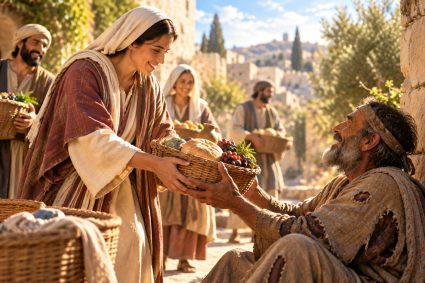
Paul had the right to receive material support from the church. Those who proclaim the gospel may also live from the gospel. Paul himself confirms this principle, and it reflects God’s order. Spiritual work is valuable and should not be despised.
Yet in Corinth, Paul voluntarily gave up this right. The reason was not that receiving support would have been wrong. The reason was that he did not want to place any obstacle in the way of the gospel. In a city like Corinth, some might have misunderstood his preaching as a means of personal gain or as a religious business.
Paul therefore shows that not every right must be exercised in every situation. Christian ethics does not ask only: Do I have the right to do this? It also asks: What effect will my behavior have? Does it serve the gospel? Does it build others up? Does it help people recognize Christ?
This creates a very important connection with 1 Corinthians 8. There the subject was knowledge and love. Some Corinthians believed that their knowledge gave them the freedom to exercise certain liberties. Paul now shows through his own example that love sometimes willingly refrains, even when something is permitted or justified.
Self-denial is not a sign of weakness, but of spiritual strength. A person who can give up a right shows that he is not controlled by his ego. He is free not only to do something, but also to refrain from doing it.
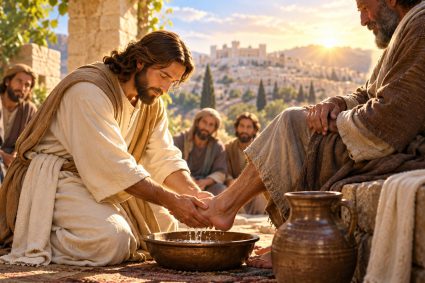
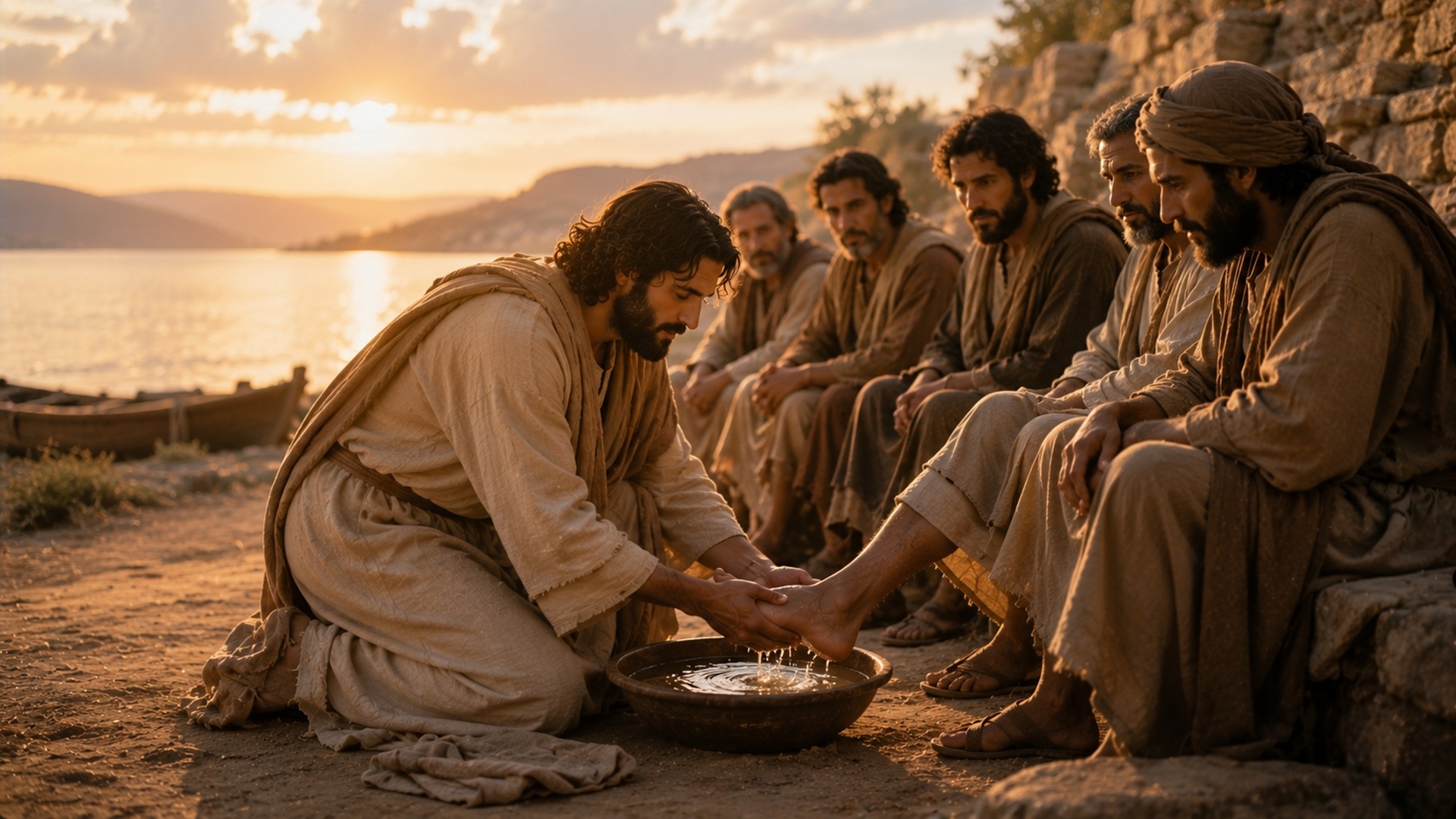
Paul’s attitude is deeply shaped by the cross. Christ possessed every right and all glory, yet He humbled Himself in order to save us. Whoever follows Christ learns not to place self at the center, but to serve others in love.
The gospel therefore shapes not only our doctrine, but also the way we use freedom. Freedom without love can become destructive. Freedom shaped by the cross becomes service.
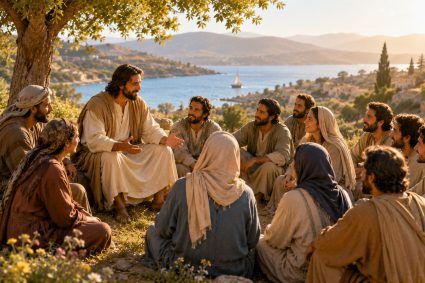
Paul wanted to “become all things to all people” so that he might save some. This does not mean that he abandoned his convictions or adjusted God’s commandments. It means that he was willing to set aside personal preferences and rights in order to reach people where they were. His goal was not self-assertion, but salvation.
The theological core is this: Christian freedom stands under the rule of love. The cross does not free us for selfish living, but for selfless service. Whoever has understood the gospel does not ask only about personal advantage, but about God’s glory and the salvation of others.
🌟 6. Spiritual Deepening
This lesson confronts us with a very personal question: Are there things I should give up even though I am entitled to them? This is not easy, because we often defend our rights very quickly. We do not want to be disadvantaged, overlooked, or misunderstood.
Paul shows, however, that love is greater than the desire always to insist on being right. He could have demanded support, but he did not. He chose the more difficult path because he valued the gospel more highly than his own claims.
This does not mean that Christians must always tolerate everything or never establish boundaries. Paul is not speaking about self-destruction or unhealthy submission. He is speaking about voluntary sacrifice motivated by love, especially where exercising a right could become an obstacle to others or to the gospel.
In daily life, this can take many forms. Perhaps I give up a certain freedom because it would spiritually confuse someone else. Perhaps I give up my comfort in order to help someone. Perhaps I give up recognition so that Christ remains at the center. Perhaps I refrain from insisting on my rights in order to promote peace and reconciliation.
Selfless love asks: What does the other person need? What serves Christ? What helps the gospel? These questions change our attitude. We no longer live only for ourselves, but as people who are loved and sent by Christ.
Paul’s example also shows that service involves sacrifice. Sharing the gospel is not merely a beautiful assignment; it often requires giving something up. Time, energy, money, comfort, personal desires, and even legitimate claims may be affected.
Yet this sacrifice is not empty. It is made for a higher purpose. Paul wanted to win people for Christ. When a voluntary sacrifice helps someone recognize Jesus more clearly, that sacrifice is not a loss, but an act of service.
This is the logic of the cross. Christ appeared to lose everything, and through that loss He secured our salvation. In God’s kingdom, surrender is not defeat. It can become the path through which God’s love is made visible.
This lesson also warns us against a faith centered only on personal freedom. Christians sometimes say, “That is my decision. That is my right. I am allowed to do that.” Paul would ask, “Yes, but does it build up? Does it help others? Does it honor God? Does it advance the gospel?”
Christian maturity is seen in our willingness to face such questions honestly. An immature faith insists on rights. A mature faith considers how rights can be exercised in love. A Christlike faith is even willing to surrender rights voluntarily.
At the same time, we may know that God sees every hidden sacrifice. People may not notice what we give up out of love. But God knows the motives of the heart. No sacrifice made out of love for Christ is forgotten before Him.
Paul’s attitude invites us to view our lives missionally. Every decision can either become an obstacle or a help to the gospel. Our freedom, our use of money, our words, our habits, and our relationships can either reveal Christ or hide Him.
Therefore, selfless love is not merely a beautiful virtue. It is a missionary principle. Through it, people recognize that the gospel has truly transformed our hearts.
🔧 7. Application in Daily Life
Practical Steps:
- Examine which rights or freedoms you sometimes defend too strongly.
- When making decisions, ask: Does this serve the gospel and build others up?
- Be willing to give something up voluntarily when it helps another person spiritually.
- Seek God’s glory before your own advantage.
- Learn to use freedom with love and consideration.
- Continue serving faithfully even when your efforts are not immediately recognized.
- Make sure that your behavior does not lead people away from Christ.
- Ask God for a heart that would rather serve than assert itself.
❓ 8. Reflection Question
What could I willingly give up out of love so that my life becomes a clearer witness for Christ?
🌟 9. Closing Thought
Paul shows us that genuine Christian freedom is not selfish. Although he possessed legitimate rights as an apostle, he willingly gave them up so that he would place no obstacle in the way of the gospel. His love for Christ and for people was greater than his desire for personal advantage. In this way, he becomes an example of selfless love that asks not only what is permitted, but what saves, builds up, and honors God. The cross of Jesus shapes a freedom that becomes service. Whoever follows Christ learns to give up rights voluntarily so that the gospel may advance.
“Nevertheless we have not used this right, but endure all things lest we hinder the gospel of Christ.” 1 Corinthians 9:12 ✨🤲🕊️🙏