
👤 The Biblical Person of the Day
🌲 Hiram – The King Who Supported the Building of the Temple
📌 Profile
- Name: Hiram
- Time of Birth: approximately the 11th century BC
- Place of Birth: probably Tyre in Phoenicia
- Time of Death: approximately the 10th century BC
- Age: unknown
- Occupation: King of Tyre
📖 Brief Story
Hiram was king of Tyre, an important Phoenician port city on the Mediterranean coast. His kingdom was especially known for trade, seafaring, skilled craftsmen, and the valuable cedars of Lebanon.
Even during David’s reign, Hiram maintained friendly relations with Israel. He sent David cedar wood, carpenters, and stonemasons so that a royal house could be built for him in Jerusalem.
After David’s death, Hiram heard that Solomon had become king. He sent his servants to him because he had valued David throughout his reign.
Solomon explained to Hiram that he wanted to build a temple for the Lord. Because Israel did not possess the same timber resources or expertise as Tyre, Solomon asked him for support.
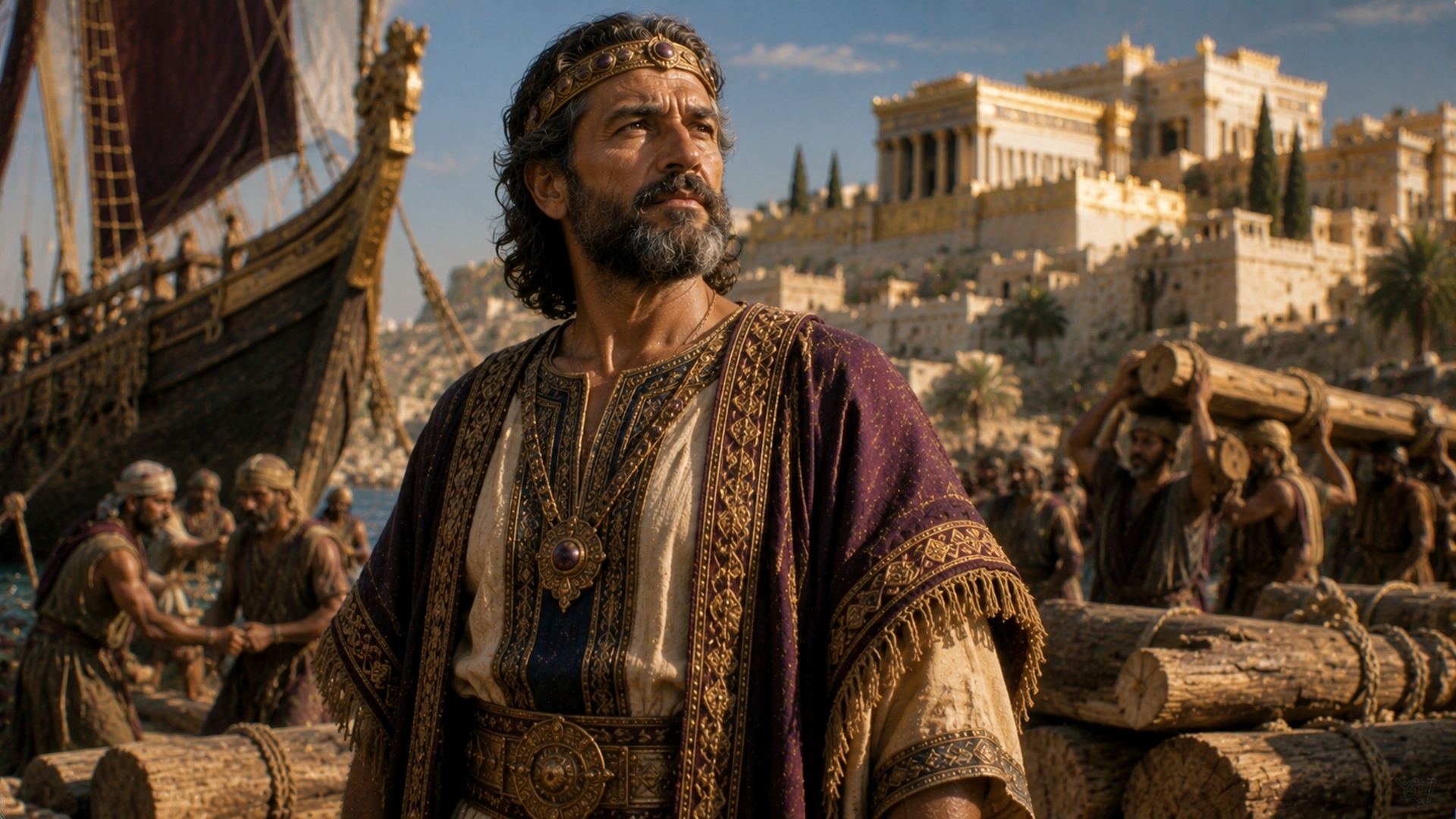
Hiram was pleased with Solomon’s plan. He provided cedar and cypress wood from Lebanon and had it transported to the sea. From there, it was carried onward by water.
An economic and political partnership developed between Hiram and Solomon. Solomon supplied food for Hiram’s royal household, while Hiram provided materials and experienced workers for the major building projects.
His story shows that people from different nations and cultures can work together on a task greater than their personal interests.
🔥 The Decisive Moment
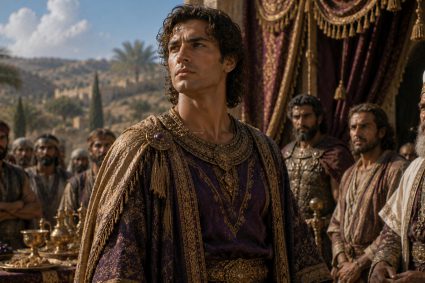
Hiram hears about Solomon’s plan to build a temple for the Lord and provides wood, workers, and his extensive expertise.
✨ 7 Special Facts About Hiram
- He was king of the important port city of Tyre
- He maintained a friendly relationship with David
- He sent building materials and craftsmen to Jerusalem
- He supported Solomon in building the temple
- He supplied cedar and cypress wood from Lebanon
- He made a treaty of peace with Solomon
- He later also promoted joint trade and seafaring projects
⚖️ Strengths & Weaknesses
✔ dependable
✔ generous
✔ diplomatically skilled
✔ willing to cooperate
❌ his relationships were also shaped by economic interests
❌ not all later agreements with Solomon met his expectations
❗ The Mistake That Shaped Him
The Bible does not report any specific personal wrongdoing by Hiram. Later, however, he was dissatisfied with the cities Solomon gave him.
➡️ His story reminds us that even good cooperation requires clear, fair agreements that both sides understand.
📜 Key Verse
“Blessed be the Lord today, who has given David a wise son over this great people!” (1 Kings 5:7)
🧠 The Life Lesson
Great tasks often succeed when people combine their different gifts, opportunities, and experiences.
🎯 Application for Today
Do not use your resources and abilities only for your own success. Consider how you can use them to support a good work and help others.
❓ Question for You
What ability or opportunity could you contribute to a task that you could never accomplish alone?
📌 Context
Hiram ruled Tyre during the time of David and Solomon and was an important partner of Israel in the construction of the royal palace and the temple in Jerusalem.
🔗 Connection
Hiram was a friend of David and later worked closely with Solomon. He should not be confused with the craftsman of the same name who made the bronze objects for the temple.
Conclusion:
Hiram shows that God could also use people outside Israel to support the building of His house. His story represents friendship, cooperation, and the responsible use of available resources.
See you tomorrow with the next biblical person! 📖

✨ The Life Story ✨
✨ The Life Story of Hiram – Cedar Wood for the House of God ✨
🌊 A King on the Mediterranean Coast
Hiram ruled over Tyre, a prosperous port city on the coast of the Mediterranean Sea. From there, the Phoenicians traded with many countries and were known for their ships, craftsmanship, and economic influence.
Hiram’s kingdom possessed something especially valuable for major building projects: the mighty cedars of Lebanon. These trees provided durable and precious timber that was highly valued in the ancient world.
As king of an important commercial center, Hiram had not only to govern, but also to build relationships, make treaties, and wisely represent the interests of his country. His story therefore became closely connected with Kings David and Solomon.
🤝 Friendship with David
When David established his reign in Jerusalem, Hiram made contact with him. He sent cedar wood, experienced carpenters, and stonemasons who built a house for David.
This support was more than a business delivery. It showed that Hiram recognized David as king and was interested in maintaining a peaceful relationship with Israel.
A bond developed between the two kings that continued even after David’s death. Hiram had valued David and therefore initially treated his son Solomon with goodwill as well.
👑 A New King in Jerusalem
When Solomon ascended the throne, Hiram sent his servants to him. He wanted to continue the existing friendship and learn how relations between Tyre and Israel would develop under the new king.
Solomon told him about a great undertaking. David had wanted to build a house for the Lord, but the many wars of his reign had prevented him from doing so. Israel was now living in a time of peace, and Solomon wanted to fulfill this task.
For such a building, however, he needed materials and skilled workers that Hiram possessed in a special way. Therefore, Solomon asked the king of Tyre for help.
🌲 The Cedars of Lebanon
Solomon asked Hiram to provide workers to cut down the cedars of Lebanon. He knew that the men of Sidon and Tyre had great experience in working with this precious timber.
Hiram was pleased with Solomon’s message. He acknowledged Solomon’s wisdom and praised the Lord for giving David a wise son as his successor.
He then promised Solomon his support. The trees were to be cut down, brought to the sea, tied together into rafts, and transported to the place Solomon designated. Thus began a vast joint project between two kingdoms.
🍞 An Agreement for Mutual Benefit
Hiram’s support was provided within the framework of a clear agreement. While Tyre supplied timber and skilled workers, Solomon provided Hiram’s royal household with large quantities of grain and oil.
Both kingdoms contributed what they possessed. Tyre had timber, craftsmen, and experience in transport by sea. Israel had agricultural products and the workforce needed for the great building project.
This cooperation shows how different strengths can complement one another. Neither kingdom had to possess everything on its own as long as both sides were willing to work together fairly.
🛕 A Contribution to the Temple
Hiram was not an Israelite and did not belong to the priesthood. Nevertheless, he made an important contribution to the building of the temple in Jerusalem.
The cedars that came from his territory became a visible part of the house of God. Materials from the mountains of Lebanon found their place in a location that became central to Israel’s worship.
Hiram’s story thus shows that God could also include people outside the immediate community of faith in His plans. Their abilities, resources, and relationships could serve a work they had not begun themselves.
⚓ Shared Journeys Across the Sea
The cooperation between Hiram and Solomon was not limited to the building of the temple. Later, the two kings also worked together on trade and seafaring projects.
Hiram’s sailors possessed extensive experience at sea and worked alongside Solomon’s men. Their ships reached distant regions and brought back valuable goods.
In this way, the original support for the building project developed into a longer-term partnership. Peace made trade, exchange, and joint projects possible, benefiting both kingdoms.
🏘️ Not Every Agreement Was Perfect
Later, Solomon gave Hiram twenty cities in Galilee. When Hiram inspected them, however, he was not pleased with them. He called the region Cabul, a name that expressed his disappointment.
This incident shows that even a successful friendship is not free from tension and differing expectations. Good relationships must be cared for and require agreements that both sides consider fair.
Nevertheless, Hiram’s fundamental contribution to David’s house, Solomon’s temple, and their joint trade projects remained highly significant.
✨ The Enduring Message of His Life
Hiram shows that cooperation can overcome boundaries between nations, cultures, and responsibilities. He provided timber, expertise, workers, and trade routes, thereby helping to accomplish a work that held deep spiritual significance for Israel.
His story reminds us that not everyone needs to possess the same gifts. What matters is whether people are willing to contribute their resources faithfully and recognize the abilities of others.
🌌 Closing Thought
Hiram did not serve inside the temple or carry out priestly duties there. Yet without his cedars, craftsmen, and support, the construction would have been far more difficult.
He used the wealth and experience of his kingdom to promote a great undertaking. In this way, a pagan king became an important partner in building the house of God.
👉 His life story shows: Great works arise when people unite their different gifts and willingly place what they possess in the service of a good cause.